
După 35 de ani. Reinterpretări și demitizări ale comunismului românesc
Coordonatori: Lucian Vasile, Constantin Vasilescu, Florin S. Soare
Vol. XIX/2024
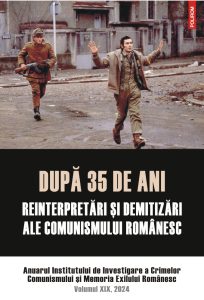
Volumul XIX/2024 al Anuarului IICCMER este disponibil pe site-ul Editurii POLIROM.
CUPRINS
Prezentarea autorilor
Cuvânt înainte (Constantin Vasilescu)
Partea I – Biografii
Adevăratul tovarăș de drum. Petre Bejan și disidența liberală în primii ani de comunism (Lucian VASILE)
Abstract
The activity of the parties that claimed to be the continuers of the interwar political life in the second half of the 40s, as well as the biographies of their leaders, seems quite well known today: PNȚ was banned in July 1947, as a result of the Tămădău Operation, and Iuliu Maniu and Ion Mihalache were sentenced to life imprisonment and died in detention; PNL-Brătianu suspended its activity in the same summer, and its leaders were arrested in the following period; and the PSD was either unified at the beginning of 1948 with the PCR, resulting in the new Romanian Workers’ Party, or was banned in the same 1947, and its leaders, grouped next to Constantin Titel-Petrescu, were later arrested.
However, there is also an atypical case: PNL-Tătărăscu, which became, after 1947, PNL-Bejan, but which officially carried the title of National-Liberal Party. Regarded as a liberal faction and put into practice as a real companion of the communists, PNL-Bejan became, after the establishment of the republic, a real exotic presence in the Romanian political scene. Despite the totalitarian context, the formation’s existence, from 1948 to 1950, still followed the appearances of a democratic set-up: participation in the 1948 elections, obtaining and assuming seven parliamentary seats in the Great National Assembly, but also a small, yet real activity of a few organizations across the country. His existence in those turbulent years was almost synonymous with that of Petre Bejan, one of the least visible, from a historiographical point of view, interwar Romanian politicians, but who, at the dawn of communism, had a particularly important role in the sunset of the Romanian democracy.
Skilled and unscrupulous politician, accused by many and followed with confidence by few, Bejan made his way from a small party member from a provincial town to the last leader of Romanian liberalism of the first half of the 20th century, fast-forwarding his career and making spectacular jumps. Bejan’s political life, however, is a reflection of the deficiencies of Romanian democracy in the 30s and its members who rose on the skeleton of the political system, eroding it until it collapsed in the tumult of pressure and constraints.
Odisie Pârvulescu: de la tipografie la tribuna oficială. O călătorie prin social-democrație, legionarism și comunism (Diego-Maricel CIOBOTARU)
Abstract
This article explores the life and legacy of Odisie Pârvulescu, a significant figure in Romania’s social-democratic movement during the interwar period and the early years of the communist regime. Through a detailed examination of his career, the study highlights Pârvulescu’s transition from a typographer to a leading political activist, emphasizing his roles within various labor and sports organizations that served as platforms for political mobilization. The research aims to uncover the complex interplay between Pârvulescu’s social-democratic beliefs and his later involvement with the Romanian Communist Party. By analyzing his leadership in workers’ sports associations, which often doubled as recruitment grounds for political cause, the article provides insights into how these movements intersected and influenced each other. The study also addresses the broader implications of Pârvulescu’s activism, particularly regarding the use of social and cultural organizations as tools for political control and propaganda during the interwar period and beyond. Ultimately, the article contributes to a deeper understanding of the role of individual activists in shaping the trajectories of political movements in 20th-century Romania. It underscores the importance of figures like Pârvulescu in the broader narrative of Romania’s transition from a monarchy to a communist state.
Alexandru Voitinovici – magistratul-cameleon. De la justiția fascistă, la tribunalul comunist (Mihai BURCEA, Alexandru-Cristian VOICU)
Abstract
The current paper provides a biographical analysis of a political figure in the communist top echelons who managed to remain somewhat anonymous, despite the prominence he enjoyed immediately after World War II. Although he was involved as a magistrate in high-profile trials such as those of Ion Antonescu and Iuliu Maniu, Alexandru Voitinovici has preserved an aura of mystery. A socialist sympathizer since his student days, having known Alexandru Bârlădeanu and Constantin Zosin, Voitinovici managed to build a legal career even before the establishment of the popular regime. Both Voitinovici and his fellow magistrate Alexandru Iancu Petrescu benefited greatly from the fact that they were accepted by the new political power, the former becoming president of the People’s Tribunal in April 1945, at the age of just 30, after Lucrețiu Pătrășcanu, the Justice minister at the time, met him twice. After dealing with “politically sensitive” cases such as those of Antonescu and Maniu, Voitinovici was rewarded with various positions, becoming Chief Prosecutor of the RPR (September 1948 – August 1952), First Deputy Chief Prosecutor of the RPR (1953 – 1954, a position from which he was dismissed after investigations into the illegal imprisonment of thousands of people) and President of the Supreme Tribunal of the RPR (July 1954 – 1967). In order to bring to the public’s attention the biography of a character with a winding path, we will first of all resort to the unpublished sources from the National Romanian Archives, the files in which Voitinovici’s name is found being numerous. There are also documents from the Diplomatic Archives or the Romanian Military Archives. In addition to unpublished sources, we also have at our disposal published sources, especially memoirs (Andrei Șiperco, George Pavel Vuza, Marin Ioniță, etc.), but also press.
Omul din spatele loviturii. Biografia lui Dan Diaca (Constantin VASILESCU)
Abstract
Dan Diaca’s biography is marked by the „re-education” in Piteşti, one of the most terrible crimes of communist regimes everywhere. Arrested and convicted as a teenager, he soon came to be known as one of the toughest aggressors in communist prisons. His route is an eloquent example of how a terrible experience like the one in Piteşti could influence the lives of those involved. Released from prison, Diaca was never able to reintegrate into communist society, which is why he chose to flee the country, at any risk. After an unsuccessful attempt, he finally arrived in Austria, where he would die in 2023, far from the place where he had known and produced so much suffering.
Ligia și Pompiliu Macovei: cariere paralele în promovarea agendei regimului comunist pe scena internațională (Cosmin NĂSUI)
Abstract
Ligia and Pompiliu Macovei were significant figures in Romania’s communist-era cultural and diplomatic landscape. Their careers spanned multiple political regimes, from Antonescu to Ceaușescu, demonstrating their ability to navigate complex political environments. As Romania’s representatives to UNESCO, they played an administrative role in promoting the communist regime’s agenda on the international stage, often blurring the lines between diplomacy and propaganda. The Macoveis’ involvement in art and politics highlights the intricate relationship between culture and ideology in communist Romania. Their artistic pursuits and diplomatic roles were closely intertwined with the state’s propaganda efforts, reflecting the tight control exerted by the Romanian Communist Party over all aspects of public life, including foreign relations. Despite their allegiance to the regime, the Macoveis also engaged in some positive actions, such as their involvement in the rehabilitation of former political prisoners and their significant contributions to Romania’s art scene. Their extensive private art collection, now part of Romania’s cultural heritage, stands as a testament to their passion for art and their desire to preserve Romanian culture. In retrospect, the activity of Ligia and Pompiliu Macovei illustrates the complex legacy of intellectuals who worked within the communist system. While they were instrumental in promoting state propaganda, they also made lasting contributions to Romania’s cultural landscape.Their lives and careers offer valuable insights into the intricate dynamics of power, culture, and diplomacy in communist-era Romania.
Partea a II-a – Studii tematice
„Problema catolică”. Studiu de caz: Rebeliunea de la Butea, județul Roman (august 1949) (Ovidiu LEONTE)
Abstract
The year 1949 was a turning point in the life of the Roman Catholic communities in Moldova, in the Siret valley. During the spring of that year, the inhabitants of Luizi Călugăra, Sărata, Fărăoani (Bacău) and other villages experienced the wrath of the repression forces of the „popular-democratic regime”. Also, the people from the village of Butea, Roman County, tried in august that year to defend their priest Gheorghe Petz. Attended by a large number of Roman Catholic believers, the riot was suppressed by the security forces from Bacău and Iași, by militiamen from the Bâra Militia District and the Romanian County Militia and also by operational workers of the County Security Service. Three people (including two teenagers aged 13 and 15) were shot and wounded. Five families were deported to Dobrogea for five years, and five others were convicted of rebellion. Petz was arrested a year later (on 30th of October 1950). In the Report drawn up on 12 May 1951 by Gheorghe Enoiu, used for later prosecution of the Roman Catholic priest Gheorghe Petz, the reasons for the arrest were outlined clearly: „he housed Smaranda Brăescu for 14 months, he instigated the rebellion, installed himself at the head of the Diocese of Iași without the prior approval of the Ministry of Religion, did not denounce the fugitives Mihai Albert and Iosif Gal (the main instigators of the revolt), and in May 1950 he refused to sign the Stockholm Appeal for Peace”.
Un moment de bilanț în domeniul muzeal din România – Chestionarul Consiliului Internațional al Muzeelor (ICOM) din mai 1948 (Cristian VASILE)
Abstract
There is a tendency in Romanian historiography that neglects the political context of the post-war era, especially when it comes to legislative framework of the organization and functioning of museums during communism. In Romanian historical writing many times there was a confusion between legal norm and museum practice. Certain (apparently generous) legal provisions regarding the record of cultural objects and the administration of artistic heritage were taken for granted, ignoring the international legislation and museum practice. In this article I tried to highlight the above-mentioned obvious contrast in Romania in the first post-war years by referring to the 1948 correspondence of Bucharest-based communist authorities with the International Council of Museums (ICOM). The diplomatic correspondence clearly shows the lagging behind of the newly established Soviet type Romanian People’s Republic at that time, that is the period between 1946 and 1948. The questionnaire filled with important information, sent to ICOM by the Romanian governmental officials probably at the end of May 1948, is an extremely relevant document, because it also represents a significant first balance sheet moment of the first post-war years in the museum field. It was an opportunity to follow what the communist authorities have achieved in this cultural sector and what criteria they used in order to classify museums and art collections. I was interested too in how the property regime evolved in the case of certain collections, especially since in 1948 many nationalizations took place. I also addressed the issue of museum scientific research and the historical archives of museums. Finally, the correspondence with ICOM was an opportunity to follow the controversial history of some museums, mentioned in the answers to the questionnaire or in other related documents.
Basarabia în publicațiile exilului românesc postbelic (Liliana COROBCA)
Abstract
After the signing of the Molotov-Ribbentrop Pact in 1939 and after the end of World War II, the subject of “Bessarabia” became taboo, being subjected to harsh and careful censorship, both in Romania, where the communists came to power, and in the Soviet Union (especially in the Moldavian Soviet Socialist Republic, consisting of Bessarabia and Transnistria). But what was censored in Romania and Moldavia, was intensely promoted in exile. The present paper analyzes the political demonstrations, anniversaries, memoirs addressed to political bodies, books published in the field of Bessarabia, as well as texts from the periodical press, with emphasis on the Information Bulletin of Romanians in Exile – BIRE magazine. Apart from the documents from exile, a subchapter is about the interest of the Romanian secret services in the Bessarabian problem, the code name of Bessarabia being “Brândușa” (Crocus flower). From the first researches of the BIRE collection, we could see two thematic directions: 1) Bessarabia – Romanian land, with important historical moments related to the Great Union, the political leaders who fought for the national movement, commemorations dedicated to the union, arguments related to the rights of Romanians and 2) News about Soviet Moldova, what is currently happening in this territory, the Russification/ Sovietization process being one of special interest, current social phenomena, with an emphasis on political changes, deportations, violation of human rights.
„Rezistența prin cultură” în România ceaușistă – mit sau realitate? (Simona DELEANU)
Abstract
The debate about “resistance through culture” gained momentum, obviously, immediately after the Revolution of December 1989. The intellectuals – those who gave birth to this concept – tried to define their position in relation to the communist regime, through debates and polemics, in the last decades of it. If dissidence was a concept born as a result of the Western cataloging of the critical position assumed towards the party, “resistance through culture” was born in the Romanian space, defining a less public position, assumed within the profession.
Being often manifested in a restricted framework, the resistance through culture did not aim at an attack on the regime, but it was sometimes seen as such. From the perspective of intellectuals, the impossibility of manifesting as a dissident, for various reasons, and the intention to respect the ethical norms of one’s own vocation, led to the birth of this passive opposition.
Dissent and resistance through culture were not excluded, but complemented, especially in the last communist decade, in which ethical and cultural norms were dictated in direct subordination to protochronism and the cult of personality. Throughout the post-communist decades, the debate about resistance through culture was a broad one, adding nuances, clarifications, all from a personal perspective, of the one who is in a certain position in relation to this type of opposition to regime.
O contribuție documentară la problema internărilor în Spitalul de Neuropsihiatrie de la Poiana Mare (cazul „autorilor de înscrisuri dușmănoase” din anii ‘80) (Geanina BUZEA)
Abstract
The study does not have the ambition to capture a clear picture, with a fixed outline, of the use of “political psychiatry” in Romania during the last decades of communism. He aims only to blur, on the basis of new archival documents, the “white spots” of the lack of definite information on the subject, in the hope that the resulting picture will be less shaky. Ion Vianu associates the period 1970-1979 with the “golden age” of psychiatric persecutions in Romania. If the 80s were poorer in (well-documented) examples of the use of this method of “camouflaging” political cases, currently, research in the CNSAS archive has begun to surface stories of people who were admitted to the hospital from Poiana Mare, in the last communist decade. Most of them turned out to be opponents of the regime, especially “authors of hostile documents”. The documentation for this study involved an almost archaeological approach, overlapping some information extracted from files belonging to various archival funds. Sometimes the files in the documentary, correspondence and non-operational collections provided the “key” in which the inquiry files were read. Admission to psychiatric hospitals was not the only method used by the Securitate to “camouflage” the reality of the 80s, in the sense of hiding any attempts to resist, to break out of the pattern. “Offenses of opinion” were also covered by sending to court for trivial acts of common law, those accused of committing “hostile” acts. Also, in certain situations, which could have an unwanted echo abroad, the investigation of the opponents (and their threat of heavy punishments) was followed by their release, without removing them from criminal prosecution. These methods of the Security seem to have managed to sink into oblivion and into the dust of the archives, until today, numerous cases of opposition against the communist regime.